



Ward placed, conscience clear. And the team went in the opposite direction. That happens to me, so before placing a ward I try to say its purpose out loud.
Start with your team’s next move
Before choosing a spot, ask: what are we about to do? Protect a hero in lane, approach a tower, take an area of the map or leave after a fight? Vision is useful when it helps you make a decision before meeting the enemy.
For example, an ally is about to finish a wave in an exposed lane. I would rather see the approach to them than light up a place where the team is already standing safely. First I name the threat, then I find a spot.
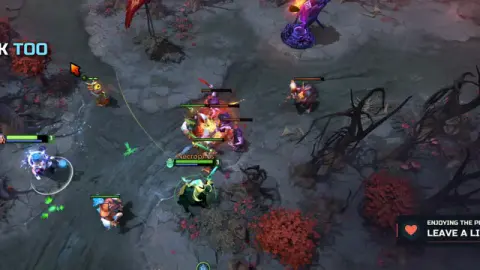 EXPLORE THE EXAMPLE ↗
Look at the visible area and dark parts of the map: no opponent in the frame does not mean nobody is nearby.
OOPS DOTA / Ruslan Ukrainskyi
Vision should give you time to react
If an enemy only becomes visible once they are next to your ally, it may already be too late to warn them. I check their likely approach and how much room we have to retreat. Familiar high ground is convenient, but habit does not explain its value.
Observer Ward gives vision. Sentry Ward is for detecting invisible objects and heroes in its area when you have the required vision. Those are different jobs: buying one does not answer the other question about the map.

Do not pay for a ward with your life
When the team is preparing to enter a dangerous area, I suggest going together. Walking into fog alone for the perfect spot can end with the ward outliving my entire plan. Rodya would call that a generous donation.
If nobody can come with me, I look for a reachable spot closer to my allies or wait for the next move. More modest vision placed in time often helps more than a risky route with no follow-up.
Check whether the information was used
We saw an enemy: what changed? Did an ally back off, did the team choose a different approach, or did we give up a chase? Those are clear signs that the vision helped. If nobody is watching the revealed area, connect the next ward to a new plan.
One rule is enough for your next game: before every trip out with a ward, finish a short “so that”. “So that we can see enemies approaching our carry” is already better than “people usually ward here”.
- What will your team do next?
- Which enemy approach do you need to spot?
- Can you place the ward with your allies?
- Which decision will change if an enemy appears?
Practice scenario: your team is about to pressure a tower, but a dangerous approach is hidden. What should the nearby ward do?
Choose an action and read the explanation.
Sources and context
This is my approach to reviewing decisions. I check game data against the current patch and distinguish practice scenarios from events in my own match.
Ruslan’s own notes on support decisions ↗