



When chat asks for ‘saves and vision’, it helps to understand the task before everyone is staring at a grey screen. I gathered the words I use in my support breakdowns.
Vision and fog
Vision means information through sight: where the enemy is and how they approach. Fog hides areas without the necessary vision. ‘Give vision’ can mean placing a ward or helping check a location safely. Clarify which area the team needs first.
Dewarding means finding and destroying enemy wards. Observer Ward helps you see; Sentry Ward helps detect invisible objects and heroes when you have the necessary vision. Checking a familiar spot is a clear step; entering a dangerous area alone to do it is a separate decision.
 EXPLORE THE EXAMPLE ↗
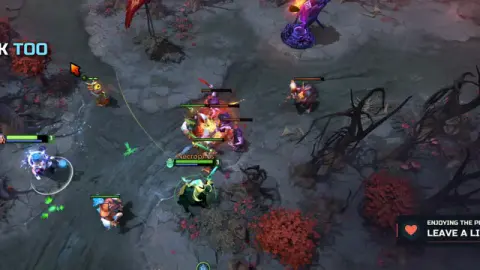
Look at the visible area and dark parts of the map: no opponent in the frame does not mean nobody is nearby.
OOPS DOTA / Ruslan Ukrainskyi
Control, saves and follow-up
Control limits enemy actions: a stun and a slow, for example, impose different restrictions. So ‘I have control’ does not yet explain whether the team can catch the target. Name the ability or expected action if the engagement depends on it.
A save helps an ally survive a threat. It may be a defensive ability or item; sometimes disabling the pursuer saves them. Follow-up is an action after the first move: an ally holds the enemy and you add your cast in time. The shared sequence matters.

Initiation and positioning
Initiation starts an engagement on a chosen target. The initiator creates the team's first chance to enter. A support can start or join afterwards: their role in a particular fight depends on the heroes and situation.
Positioning is a hero's location relative to allies, threats and the target they need. Replace ‘stand further back’ with ‘stay beside me; you can reach them with your cast from here’. A good call explains how to help. Rodya likes specifics too: where to stand and where to run afterwards.
Space and objectives
Space lets an ally perform their task more safely, such as farming a lane while the team occupies enemies elsewhere on the map. It does not justify every death: check what the ally actually gained.
An objective is the map target we gather for: a tower, Tormentor or another shared plan. After a good fight, turn the word ‘objective’ into a name and route. ‘Take the nearest tower with this wave’ is clearer than four pings in different directions.
If an unfamiliar word blocks a decision, ask for the action in plain language. Good communication ends in shared movement, not an exam on abbreviations.
Sources and context
This is my approach to reviewing decisions. I check game data against the current patch and distinguish practice scenarios from events in my own match.
Support notes by the OOPS DOTA author ↗