



Voice chat can say ‘don't go high ground without vision’ faster than a beginner can understand the first word. I want to narrow that gap: show the situation, explain the meaning and give a clear next step.
A word becomes useful in a specific situation
The internet has plenty of glossaries, wikis, videos and detailed guides. Our task is to provide a clear entry into that information: the name in your language, English equivalent, gaming slang and a visual example together. You should not have to guess the right search query first.
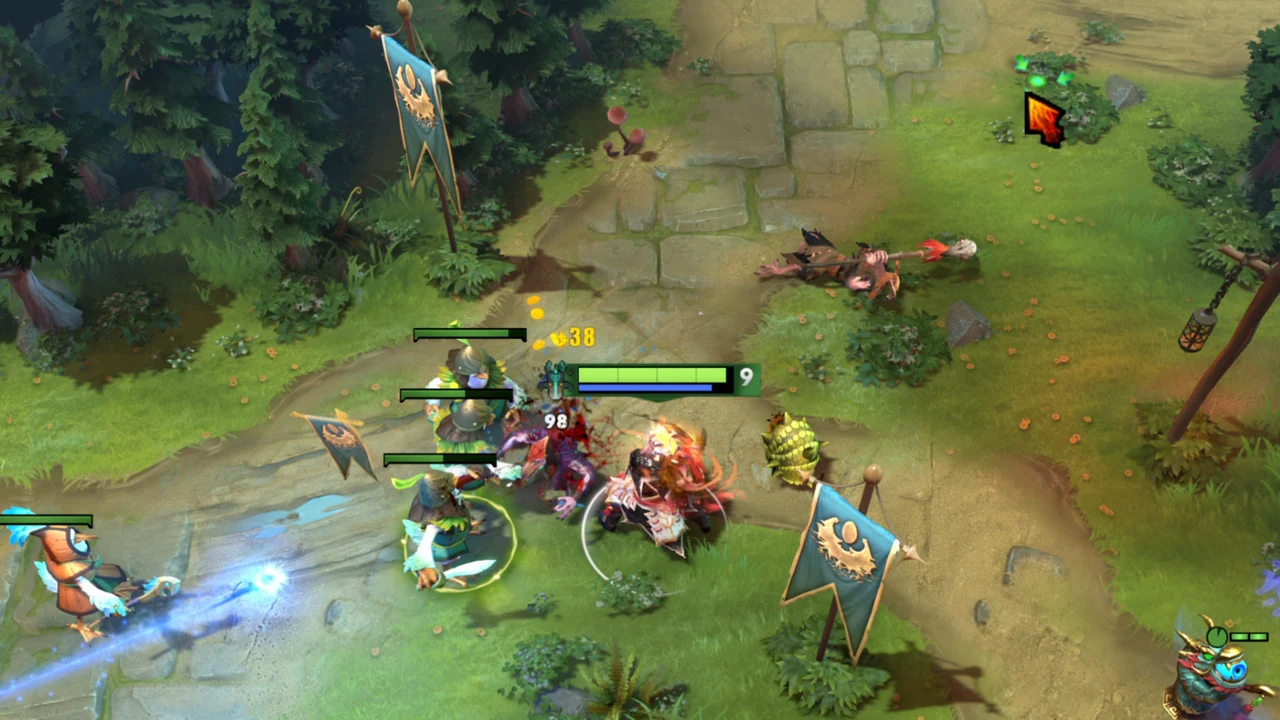
Last hitting is a good example. Showing any lane with creeps is not enough. What matters is seeing the final attack after which the creep dies and the hero gains gold. Then the definition connects with an action you can repeat.
- The name helps you search for the term.
- The English equivalent helps you recognise it in the interface and someone else's guide.
- Slang helps you understand what allies are saying now.
- An example shows where the idea appears in a match.
‘I want the explanation to help you recognise the situation in your own match and understand what to do next.’
Ruslan Ukrainskyi · OOPS DOTA

For beginners: one word at a time
I do not suggest learning every term in order before your first match. Start with something you have encountered: lane, last hit, deny, vision, TP. Open the card, look at the image and put the meaning into your own words. If it is still unclear, return to the example rather than a long list.
Then take one action into practice. For example, in a bot match, watch a creep's health and try to land the final hit. The first attempt aims to recognise the moment, not immediately produce perfect stats.
- Choose a word from your last confusing situation.
- Find the hero, target and action in the image.
- Repeat the situation in a tutorial, Demo Hero or bot match.
- Explain to yourself what changed after the action.
 EXPLORE THE EXAMPLE ↗
Watch the enemy creep next to Juggernaut: a sword strike finishes it off, and +38 gold appears after it dies. That is a last hit. The number belongs to this recording, not every creep bounty.
OOPS DOTA / Ruslan Ukrainskyi · own Juggernaut recording
Returning after a break: check what seems familiar
A returning player often remembers the words but relies on old habits. The glossary quickly restores context. Then open the related hero or item page: abilities, upgrades, effects and available actions may have changed.
A familiar name does not guarantee an old build or interaction still works the same way. In the knowledge base, I show the source and check date. For exact values, check the current client, especially before buying an expensive item or choosing a hero for a new role.
Similar words do not mean identical restrictions
Silence, also called ‘salo’ in Russian slang, prevents ability use. A stun restricts more actions. A root limits movement but does not make every cast unavailable. In a specific situation, check the effect itself and its description.
That is why we show more than one recognisable ability. Control can come from different sources: a hero, an item or several effects interacting. You can encounter hex on Lion, Shadow Shaman and Scythe of Vyse. The key is understanding what happens to the target and which responses remain, not memorising one picture.
- Recognise the effect on your hero first.
- Check movement, attacks, abilities and items separately.
- Choose a response for that restriction and the specific source of control.
A frame first. A short moment when needed
A term card first shows a still image. You can examine a neutral camp, ramp, inventory or hero positions without a player covering half the screen. For actions difficult to explain in one frame, a short demonstration is available by button.
It starts only after you click. Nothing plays in the background, interrupts the match audio or makes you read several moving cards at once. Understand the example first, then return to the explanation.
The glossary opens the knowledge base; it is not the final stop
From a term, it is easy to reach a lesson, hero, item or our published match. ‘What is it?’ gradually becomes ‘why do it?’ and ‘why did it work here?’ In OOPS DOTA, I connect explanation with action and review.
I am developing the detailed knowledge base in Russian and gradually translating it in full. The homepage, main pages, episodes and five news articles are already available in 26 languages. Lessons and hero and item cards receive separate checks for translation completeness: the menu language alone does not mean all the content is ready. I want to preserve clear explanations and familiar gaming slang in every language.
Chat says ‘don't go high ground without vision’. What is more useful for a beginner?
Choose an action and read the explanation.
Sources and context
This is my approach to reviewing decisions. I check game data against the current patch and distinguish practice scenarios from events in my own match.
OOPS DOTA visual glossary ↗Valve: tutorial scenarios and glossary (2021) ↗Valve: current heroes and abilities ↗