


One topic. One exercise.
After a match, it is easy to reach two useless verdicts: ‘I'm the best’ or ‘I ruined everything’. I suggest a more precise review. One moment shows what you wanted, which information you saw and what you can change in the next attempt.
Choose a moment rather than grading the whole player
A missed last hit, a failed TP, a purchase, an initiation or a good save will do. A beginner does not need to rewatch the whole match in order. Choose a short moment linked to a lesson you have already covered and reconstruct what happened before it.
Reviewing success is useful too: why did the action work, and can you repeat the conditions? One result does not prove the decision is always right. Equally, one death does not prove every risk was a mistake. We need the mechanism behind the event, not an emotional label.
«I want to leave the replay with one clear adjustment, not a long list of reasons to stop playing.»
Ruslan Ukrainskyi · OOPS DOTA
Separate the information available then from hindsight
In a replay, you can see more than your hero saw when deciding. So examine the situation with the vision available then first: where allies were, which opponents showed and what remained unknown. Otherwise, the review unfairly demands that you guess hidden information.
Write down your intention before judging the result. For example, ‘I wanted to help an ally with a TP’ or ‘I wanted to retreat after my ultimate’. Then ask which observable signs supported the decision. Missing information is a reason to choose more cautiously, not proof that the enemy had to be absent.
 EXPLORE THE EXAMPLE ↗
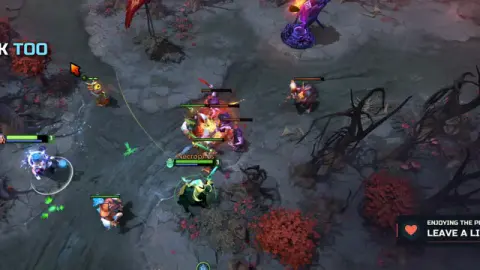
The dark area hides what is happening. An opponent may be standing near the edge of your vision; one step forward could reveal an unpleasant surprise.
OOPS DOTA / Ruslan Ukrainskyi
Decisions and execution need different fixes
A suitable item left unused and an unsuitable purchase are different mistakes. A correct TP destination with a late activation differs from teleporting into an already lost position. If you mix them up, you may practise speed when you first need to change your choice.
State the cause without reading other people's minds: ‘I didn't check the cooldown’, ‘I didn't see the wave’, ‘I went without an ally’. You do not need to guess the whole team's intentions. Work with what you can observe and change yourself.
 EXPLORE THE EXAMPLE ↗
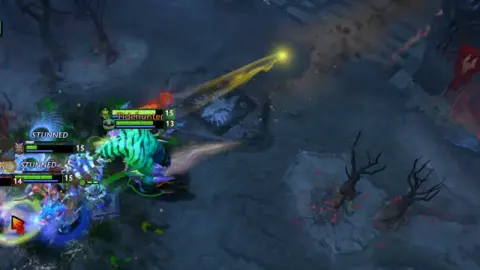
After a tough fight, it’s easy to rush and get frustrated. Tilt isn’t a separate button in the game: you notice it in your decisions.
OOPS DOTA / Ruslan UkrainskyiThe next attempt tests one adjustment
Choose an observable action: name the destination and purpose before a TP, check resources after a trade, assess vision before a ramp. ‘Play better’ does not say exactly what to do or how to recognise the result.
Write briefly: ‘I wanted X; saw Y; did Z; in the next match I'll test W’. After the next match, return to one moment and compare. You can repeat individual lessons in the course: marking one records practice, but does not mean you have mastered the skill forever.
- 01Recall my intention
- 02Reconstruct available information
- 03Find one cause
- 04Choose one adjustment
Try it in the client.
Open an available replay of your own, or recall a specific moment from a bot match. If you have no recording, do not invent events: use the next attempt to observe one action.
- 01
Choose a moment lasting a few actions: a last hit, TP, purchase or entry into a fight.
- 02
Name your intention and the information your hero had before acting.
- 03
Compare the plan with the result; separate the choice from the quality of execution.
- 04
Record one specific cause without making a broad judgement of yourself or your team.
- 05
Choose one adjustment for the next match and a lesson whose exercise helps you test it.
How to tell whether it worked
You have a short note about a real moment and an action you can use to assess your next attempt.
In a replay, you see a hidden enemy you did not see in the match. How can you assess the decision more fairly?
Choose an action and read the explanation.
Tried it in-game?
Mark the lesson when you’ve done the practice. It’s your checkmark, not a skill grade.
Return to the learning path ↗Sources and context
An original beginner course by Ruslan Ukrainskyi. The learning path was prepared on October 6, 2026 for patch 7.41f; check exact values, object locations and interactions against the current client and Valve’s source. Illustrations have separate captions: our own recordings, official demonstrations and clearly marked historical examples.
Valve: short practice scenarios and a glossary (2021) ↗Valve: heroes and ability descriptions ↗Valve: current patch 7.41f notes ↗