


One topic. One exercise.
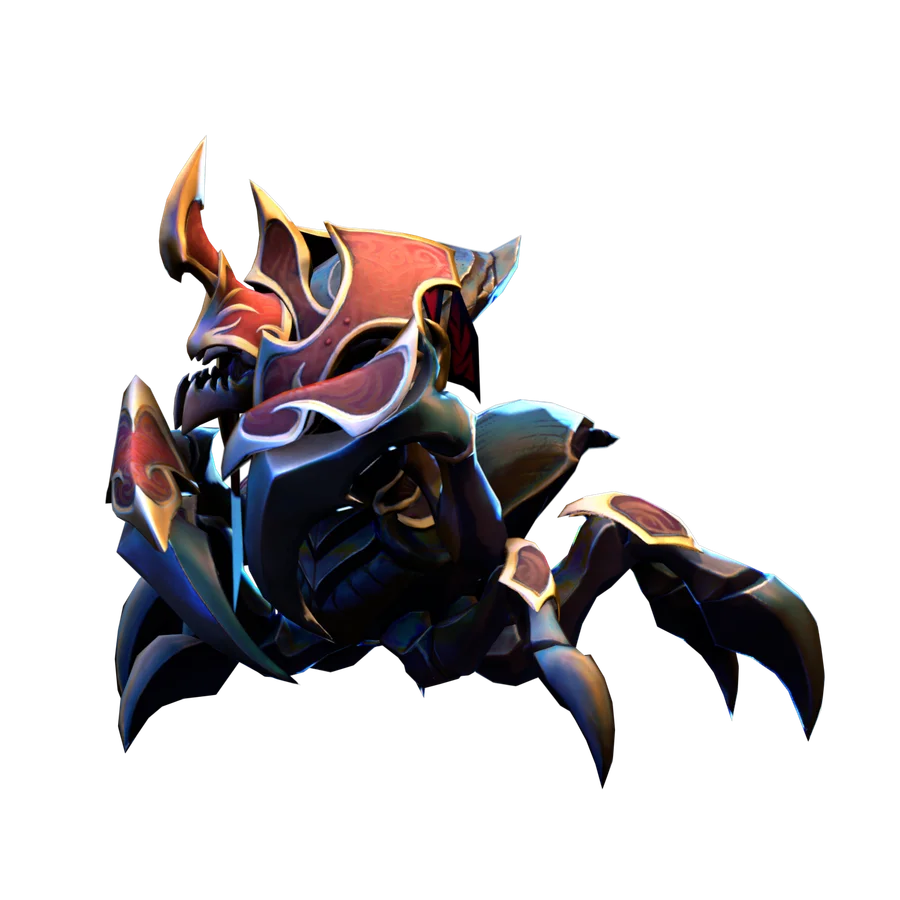
Landing a hit on the enemy feels good. After the attack, though, look at your side of the trade too: how much health you lost, what you spent and which creeps you missed. A good trade creates a better situation for your next action, not just a nice animation.
Harass is meant to change lane conditions
Pressure forces your opponent to position more cautiously, spend regeneration or miss convenient opportunities. Damage is useful when it serves your task. An attack that leaves you unable to approach the wave yourself may be a losing trade.
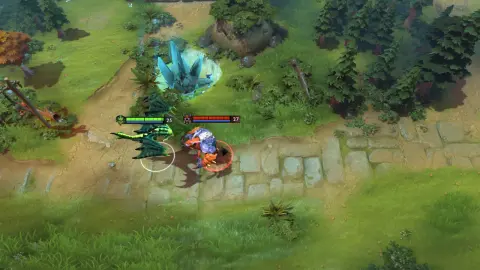
Viper's poison attacks provide one example of extra pressure. But one hero does not set the rule for all heroes: range, resources and enemy responses differ. Learn to recognise the principle of trading, then check your own hero's tools.
«I judge a trade by who can play the next wave more comfortably, not by a single red health bar.»
Ruslan Ukrainskyi · OOPS DOTA
 EXPLORE THE EXAMPLE ↗
Viper's poison attacks are one tool for harassing. The poison effect is visible on the target.
Valve · official demonstration
Look at the creeps before your first attack
If you enter a large enemy wave to land a hit, creep attacks may wipe out the benefit. If your ally is last hitting then, your advance may leave them without support. If an important creep is about to die, choosing between pressure and resources has a cost too.
Before acting, quickly name how many opponents are nearby, where you can retreat and which ability you have ready. That does not promise a winning trade, but helps distinguish a deliberate trade from simply moving towards an available target. When conditions are not right, waiting is an action too.
Plan your way out of the trade beforehand
After one or two actions, return to a safe position and check the result. Chasing under a tower can turn a small successful trade into a death. Not every low-health opponent needs to be killed immediately.
Two allies may have different jobs: one takes resources while the other interferes with the opponent. A short, clear intention, such as ‘I'll trade and come back’, helps coordinate movement. Do not call a solo attack a team plan when your ally cannot physically get there in time.
Health and mana show what you can do next
After a trade, ask whether you still have the resources to last hit, defend or use your next ability. If not, recovering may be a more useful follow-up than another attack. Spending mana is not bad in itself; what matters more is the action it enabled.
In a replay, examine one moment before and after. Compare both heroes' health, abilities spent, the wave's position and the option to retreat. You do not need to invent an exact gold value for every mistake: start by understanding which cost you overlooked.
- 01Assess the trade's cost
- 02Plan my retreat
- 03Make a short trade
- 04Compare resources
Try it in the client.
In a bot match, choose a hero with a straightforward attack or ability. Do not start the exercise under the enemy tower.
- 01
Before attacking, name your retreat route, the wave's condition and whether your ally can help.
- 02
Make a short trade with one or two actions, then retreat to your chosen position.
- 03
Compare health, mana and ability readiness before and after.
- 04
Check whether you missed an important last hit or left your ally without help.
- 05
Repeat once with your chosen adjustment: position, timing or number of actions.
How to tell whether it worked
You explain what the trade did for the lane and what it cost, and name one reason to keep applying pressure or stop.
After a successful attack, the enemy retreats under a tower and you are almost out of mana. What is more useful to assess?
Choose an action and read the explanation.
Tried it in-game?
Mark the lesson when you’ve done the practice. It’s your checkmark, not a skill grade.
Next lesson ↗Sources and context
An original beginner course by Ruslan Ukrainskyi. The learning path was prepared on October 6, 2026 for patch 7.41f; check exact values, object locations and interactions against the current client and Valve’s source. Illustrations have separate captions: our own recordings, official demonstrations and clearly marked historical examples.
Valve: short practice scenarios and a glossary (2021) ↗Valve: heroes and ability descriptions ↗Valve: current patch 7.41f notes ↗